
Insurance Features for Smart Consumers
Modern insurance features can do more than make a policy easier to manage. The right features can help lower premiums, improve claim speed, reduce household risk, and make coverage easier to compare before renewal.
The most useful features usually fall into a few groups: telematics, smart-home protection, bundle discounts, flexible deductibles, digital claim tools, and faster same-day coverage options.
Compare Insurance Features by ZIP Code
Start by comparing home and auto quotes in your ZIP code. Local pricing matters because weather exposure, claim frequency, traffic density, repair costs, and property risks can change the value of each feature.
If you need coverage quickly, review same-day car insurance quotes with instant proof before choosing a policy. Fast coverage can be useful when buying a vehicle, replacing a lapsed policy, or needing proof for registration.
Home Insurance Features
Property ratesCompare home quotes and check smart-home, security, leak sensor, and bundle savings.
Best for: smart-home credits, water sensors, monitored alarms, and home-auto bundles.
Auto Insurance Features
Driver ratesCompare auto quotes and check telematics, safe-driver, paperless, and same-day coverage options.
Best for: telematics, safe-driver discounts, digital ID cards, and instant proof.
Home Insurance with Smart Features
Smart-home protection systems are becoming one of the most practical tools for reducing homeowner insurance costs. Monitored alarms, leak sensors, water shut-off valves, smoke detectors, cameras, and smart thermostats may reduce the chance of large claims.
Many insurers may offer savings when devices are professionally monitored or connected to an app that records activity and alerts homeowners quickly. The biggest value is not only the discount — it is also the chance to prevent damage before it becomes expensive.
Leak sensors
Useful for kitchens, laundry rooms, bathrooms, basements, and water heaters.
Monitored alarms
Can reduce theft and fire risk while improving eligibility for home discounts.
Telematics and Usage-Based Auto Insurance
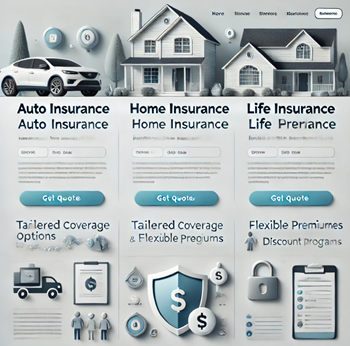
Modern insurers increasingly rely on telematics to price auto insurance. These programs may track mileage, braking behavior, acceleration, phone use, trip timing, and driving consistency.
Drivers with safer habits can often benefit from usage-based pricing. For example, Progressive Snapshot telematics savings can be useful to compare if you want to test whether safe driving data helps lower your premium.
Feature Comparison Table
Not every feature saves money for every shopper. The best approach is to compare which features match your real driving, home setup, and budget.
| Feature | Best For | Possible Value |
|---|---|---|
| Telematics | Safe and low-mileage drivers | Personalized pricing based on actual driving habits |
| Smart-home sensors | Homeowners with leak, fire, or theft concerns | May reduce risk and support home insurance discounts |
| Home-auto bundle | Households with both policies | Can reduce total cost when the bundle beats standalone quotes |
| Same-day coverage | Drivers who need proof quickly | Useful for vehicle purchase, registration, or replacing a lapse |
| Higher deductible | Drivers and homeowners with emergency savings | Can lower premium but increases claim-time cost |
Bundling Insurance for Greater Value
Bundling auto and home insurance policies is one of the most reliable ways to reduce total insurance costs. Carriers often offer multi-policy discounts when customers combine multiple policies with the same provider.
To understand how bundling works in practice, explore Allstate home and auto bundle options and compare the bundled total against standalone policies. A bundle is only a win if the combined price and coverage are both stronger.
State Rules Can Change Which Features Matter
Insurance features are not equally valuable in every state. In some places, same-day proof and liability limits matter most. In others, hail, wind, flood, wildfire, or theft exposure can make home features more important.
If you are comparing a large state market, review Texas auto insurance requirements and rate factors to see how minimum coverage rules, weather exposure, city traffic, and local competition can affect feature value.
High-traffic states
Telematics, safe-driver credits, and stronger liability limits may matter more.
Weather-risk states
Smart-home devices, roof details, water sensors, and deductible structure may matter more.
Adjusting Coverage for Better Rates
Every policyholder should review coverage at least once per year. Adjusting deductibles, removing outdated coverage, updating home rebuilding costs, or reporting new safety upgrades can reduce unnecessary premiums.
Even small improvements such as outdoor lighting, deadbolts, garage parking, anti-theft devices, water leak detectors, and paperless billing can support savings over time.
Technology-Driven Insurance Savings
New insurance technology is transforming how policies are priced and managed. Dashcams, connected vehicle diagnostics, smart-home sensors, usage-based insurance apps, and online claim tools can help insurers verify lower-risk profiles.
When insurers can confirm safer behavior or lower household risk through technology, they are often more willing to offer personalized pricing, larger discounts, or more stable renewal terms.
Digital claims
Photo uploads, claim tracking, and online documents can speed up service after a loss.
Instant proof
Digital ID cards and same-day activation can help when you need coverage quickly.
FAQ on Insurance Features and Savings
Smart-home monitoring, telematics driving programs, bundling auto and home insurance, paperless billing, and defensive driving credits are common savings paths.
When multiple policies are combined with one insurer, administrative costs may drop and companies may return part of that value as a bundle discount.
Yes. Telematics and smart-home devices provide real-world data about risk levels, allowing insurers to offer more personalized pricing.
Review coverage once a year or after major life events such as moving, buying a home, adding a driver, or improving your credit profile.
Bottom line: The best insurance features are the ones that match your real risk. Compare ZIP-based quotes first, then test telematics, bundles, same-day proof, smart-home devices, and deductibles one at a time.